South Africa
 Botswana
 Namibia
 Kenya
Kenya Morocco
 Mozambique
 Tanzania
 Zanzibar
 Zambia
 Zimbabwe
the African Travel Calendar
Knowing what will happen where and when is beneficial if you intend to visit Africa. Africa, a continent of breathtaking diversity, offers something unique every month; the secret is to schedule your trip to coincide with the finest experience available. For instance, if you travel to the Masai Mara in April, you would not be able to witness the Great Wildebeest Migration and be ready for terrible news if you were hoping for beach weather in Cape Town in July. However, there is so much to do in Africa that there is always something to do, regardless of the month you pick. When you combine contemporary travel arrangements with a nearly limitless selection of lodging options, you may plan for an incredible vacation.
Utilize our month-by-month resource, the African Travel Calendar.
January
Due to its outstanding wildlife, first-rate lodges and tented camps, trusted tour operators, and varied itineraries, Kenya and Tanzania have been the preferred safari destinations for many years. The Masai Mara and Serengeti National Park, which is the site of the spectacular Wildebeest Migration, are popular travel destinations. Both take place close to the remarkable Ngorongoro Crater, which offers the area’s most consistent Big 5 wildlife viewing.
We suggest Rwanda and Uganda for gorilla trekking and unique forest animals. Gorilla and chimp trekking, two of the most profound animal experiences in the world, is available in both countries.
Your classic savannah game reserves can also be found in both Rwanda and Uganda.
February
Traveling to Africa in February for a safari will likely involve some rain, but it might be worth it because the Kalahari and Serengeti migrations and the Calving seasons are well on, and southern Africa’s national parks and reserves are lushly covered in green. Since this is the off-peak season for many wildlife destinations, you can also take advantage of some fantastic discounts on safaris and lodging. You may also combine your safari with Cape Town at its hottest and driest time of year, or you can go to the island of Zanzibar. February is one of the greatest months for scuba diving in addition to hosting the Swahili musical festival, Sauti za Busara. In Rwanda and Uganda, the gorilla trekking season is at its peak.
March
If you visit Africa in March, you still have time to go gorilla trekking in Rwanda and Uganda (visit the Volcanos National Park in Rwanda or the Bwindi Forest in Uganda) and the conclusion of the birthing seasons in the Kalahari and Serengeti. Additionally, March through mid-May is thought to be the ideal time of year to encounter chimpanzees in Rwanda’s Nyungwe Forest if you are planning a gorilla journey. Chimpanzees are in larger groups, feeding lower in the trees, and staying in the area longer during this period, when figs and other fruits ripen.
April
Rain is beginning to fall in many of our East African safari sites. In the Serengeti, lions, leopards, and cheetahs are all in full force as the wildebeest walk through the Seronera area in long columns, drawing the attention of large cats. Many lodges are close by, yet they are ideal for escaping the congestion. The unadulterated power of Victoria Falls in full flood and the beginning of the walking safari season in the Kruger National Park, when the temperatures start to drop and the foliage starts to thin out, are also experiences that may be had when visiting Africa in April. In addition, it is a month full with sporting events and the beginning of Cape Town’s milder weather. Speaking of which, try to schedule your trip to Namibia in April around the Windhoek Carnival, a celebration of dance and song.
May
May is an excellent time to go on safari in the Kruger/Sabi Sands, Botswana, and Namibia because it is the shoulder season in southern Africa, which runs from the conclusion of the rainy season to the beginning of the dry one. As a result, you can get excellent safari packages for this time of the year.
In May and June, the migratory wildebeest will begin crossing the crocodile-infested Grumeti River when they arrive in the Western Corridor up in the Serengeti. Make reservations in advance for this event!
May is a great month for a “safari and sand” vacation because it marks the beginning of the dry months in Mozambique and its stunning island archipelagos in the Indian Ocean, such as Bazaruto and the Quirimbas.
Additionally, it is the beginning of the greatest season for Lake Malawi and KwaZulu Natal in South Africa, which means a wide variety of beach and safari combos to suit any kind of traveller, from honeymooners to families with small children.
June
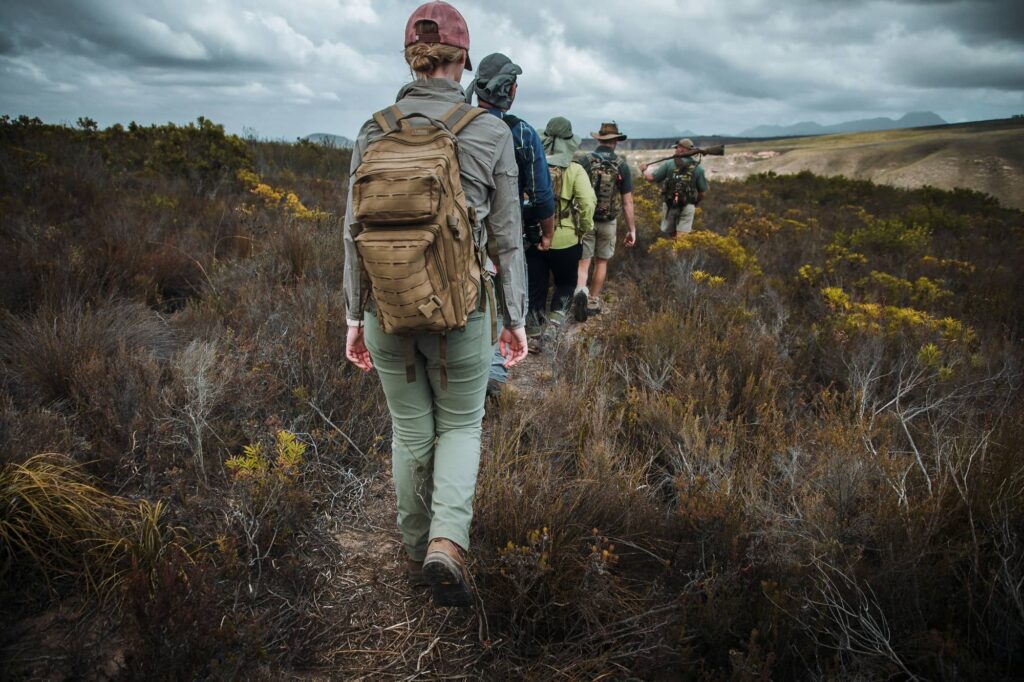
Visit Africa in June, when the southern African safari season begins. The driest, coldest, and most convenient time of year to see animals is from now until October. Highlights include the beginning of the peak season for rafting the Zambezi River and wild dog denning in Zimbabwe and Botswana. As the migratory wildebeest make their way back to the Masai Mara, they must avoid the jaws of enormous crocodiles during the Serengeti’s river crossing season. As this well-known destination enters its busiest season, make reservations as early as possible for both these events, as well as the ideally located lodging at the Ngorongoro Crater. In Rwanda’s Virunga Mountains, new-born gorillas are christened during the “Kwita Izina” ceremony in June, which also marks the return of the dry months for gorilla trekking in Uganda and Rwanda. Going to the Indian Ocean, your best chance of seeing humpback whales and dolphins, which are abundant from June to August, is to travel to the Southwest Coast of South Africa in June and November.
July
In July, visit Africa to see heavyweight game viewing. In addition to the Serengeti/Masai Mara river crossings being at their busiest, big cats in the central Serengeti are also having a great time, cleaning up after the migration has finished. While Southern Right whales have begun to come along the coast from Cape Town to Plettenberg Bay, the fantastic White shark-watching season has begun in False Bay, and it is a fantastic time to track gorillas in Rwanda and Uganda. Even though it is cooler and rainier in the Cape, there are still a lot of events going on, such as the 10-day, jam-packed Knysna Festival on the Garden Route, which goes well with an Eastern Cape Big-5 Malaria-free Safari.
August
The Cape’s winter rains have sparked an abundance of blooms, which can blanket the surrounding area in sheets of brilliant color. Although the most extensive displays are found in the desert-like Namaqualand region north of Cape Town, you do not have to go that far because the West Coast National Park is only a two-hour drive from Cape Town and is at its finest between August and September. August is a terrific month for gorilla tracking in Rwanda and Uganda, and it goes nicely with a safari in Kenya. The herds of wildebeest have arrived in the Masai Mara, and you can anticipate seeing a lot of predators in action, including hyenas, big cats, and possibly even wild dogs. With the exception of Cape Town, which has rainy weather, the weather in southern Africa is generally mild and dry, making it ideal for safaris in Zambia, South Africa, Botswana, and Zimbabwe. Try scheduling your trip to Namibia during the KUSKA Carnival in Swakopmund, which has street parties, food vendors, and kid-friendly events. Namibia is a well-liked vacation spot during this time of year. Additionally, the coast and islands of Mozambique are experiencing ideal weather, which is good news for honeymooners!
September
Take a big game safari in September in Africa; although it is getting hotter, most wildlife spots are great at the moment. For example, a lot of elephants are congregating in Botswana’s Chobe River and Okavango Delta, Zambia’s Lower Zambezi, and South Luangwa, which is home to Africa’s best walking safaris. Gorilla tracking in Rwanda and Uganda is going well this month, and the Masai Mara in Kenya is seeing a lot of drama as the herds of wildebeests are once again being hunted by predators. The Indian Ocean, Mozambique, or KwaZulu Natal coast still has beautiful weather. If you want to see whales, visit the seaside town of Hermanus, which is close to Cape Town, during the busiest whale-watching season, but make sure to reserve your accommodation in advance!
October
October offers the best animal numbers and viewing conditions in southern Africa, despite the fact that it can be hot and a little uncomfortable in some safari areas. Big cats and wild dogs are easy prey in areas like Chobe National Park, Moremi Game Reserve, Hwange, Kruger & Sabi Sands, and Etosha since they are the driest and have the highest populations of animals near water.
The Masai Mara is also becoming warmer, but it is still dry. The herds of wildebeest have dispersed throughout the reserve, but they are starting to eye the Serengeti boundary, which the impending rains will soon force them to cross.
Scuba divers frequently prefer to schedule their vacation around a specific event. For example, in Mozambique, massive, majestic whale sharks arrive in October and travel around the region from now until the beginning of the new year.
November
As the rainy season begins in southern Africa and another shoulder season approaches, popular sites become more affordable and attract a smaller percentage of peak-season tourists. To see some of Africa’s most remarkable, yet little-known, animal phenomena, visit the continent in November. Tens of thousands of wildebeest arrive in Zambia’s Liuwa Plains to take advantage of the fresh grazing, while up to 10 million straw-colored fruit bats descend upon a small area of swampy forest in Kasanka National Park. Even though it has begun to rain, Victoria Falls is currently at its lowest point; flood waters will not be present until next month. If swimming in Devil’s Pool, which is located just on the edge of the waterfall, is on your bucket list, November is the best time to accomplish it. In East Africa, too, the rains have begun.
Consider a mobile tented camp that tracks the migration and sets up in the best spots as the wildebeest herds start their southerly trek, leaving the Masai Mara and heading back to the Serengeti, seemingly drawn by some enormous invisible cord.
December
December is hot throughout Africa, and even though it is raining at safari locations in southern Africa, it is still an excellent time to see wildlife, particularly in Botswana’s Kalahari, where zebra and elephant migrations add to the variety of desert animals.
Additionally, it is the ideal time of year to witness newborn seal pups on Namibia’s Skeleton Coast and in the country’s desert locations when they emerge with their first burst of summer foliage.
In Cape Town, the party season is well on as the city enters its sunniest months, while Zanzibar is hot and dry and December is one of the greatest times to visit the island.
For a December vacation in Cape Town, be sure to book well in advance. Do not forget to ask us how to see the sights and sounds, while steering clear of the ever-growing crowds.